
The Tuesday morning kickoff across three timezones
It is 8:00 AM in London, 5:00 PM in Tokyo, and 12:00 AM in Austin. Eight avatars light up on a grid for a project kickoff call. The host, sitting in London with a fresh coffee, runs through twenty slides covering scope, deadlines, and technical dependencies. In Tokyo, an engineer whose workday is ending quietly checks out because interrupting a fluent English monologue over a two-second audio lag feels impossible. In Austin, a designer who woke up at midnight to attend sits muted in the dark, wondering why this presentation could not have been an email.
When the host asks if anyone has questions, three seconds of static follow. The host fills the silence, thanks everyone for their time, and closes the call. Nothing was broken, but nothing was built either. In our view, a team that meets like this every week risks losing its sense of shared purpose, regardless of how warm the company Slack channels appear.
Offsite retreats and social games are frequently treated as the remedy for remote isolation. Yet offsites occur once or twice a year, while operational meetings occur every week. The genuine culture of a distributed team—how people treat each other's time, who gets heard, and whether decisions are made together—is forged in the recurring meetings you run on ordinary Tuesdays.
Why do recurring meetings dictate remote team culture?
Recurring meetings dictate culture because they represent the primary visible surface area where remote colleagues experience each other's work ethic, respect, and authority. Gallup's 2024 workplace research found that remote and hybrid employees need a deliberate rhythm to stay connected. Our interpretation is that when regular contact is reduced to a passive broadcast, trust degrades quietly across timezones.
When a recurring meeting consists of one person talking over slides while seven others watch passively, it sends a clear structural message: preparation belongs to the host, and attendance is a compliance exercise. In 2024 research published by Atlassian, knowledge workers judged most of their meetings to be ineffective. When regular interactions feel unproductive, employees can easily disconnect from the team's wider goals.
Video calls also carry a distinct psychological burden that in-person gatherings do not. A 2021 study from Stanford University found that video meetings tire people in ways in-person meetings do not. Expecting team members across disparate timezones to maintain high energy while silently watching a live slide presentation ignores these mechanics. Belonging cannot grow when the medium itself creates fatigue.
Where does structured meeting rhythm actually work?
A structured, participatory meeting rhythm works best for predictable operational interactions, such as weekly team updates, project kickoffs, iteration reviews, and cross-functional check-ins. In these settings, centralising preparation in a single host creates a bottleneck, whereas distributing contribution before the call gives every participant explicit ownership.
This approach does not hold for every type of meeting. Crisis response sessions, early-stage creative brainstorming, and delicate interpersonal discussions require unstructured synchronous conversation. When a project is off course or two leads disagree on strategic direction, forced structures and async polls get in the way of necessary live debate. Those moments demand open-ended, real-time dialogue where people can navigate ambiguity together.
For recurring work, however, structure is what creates equity. If a team kickoff relies entirely on spontaneous live debate, the person sitting in London at 8:00 AM is far more likely to dominate the discussion than the person sitting in Austin at midnight. Designing a predictable rhythm where inputs are gathered before the call protects participants in inconvenient timezones from being excluded by local geography.
How distributed preparation works across the week
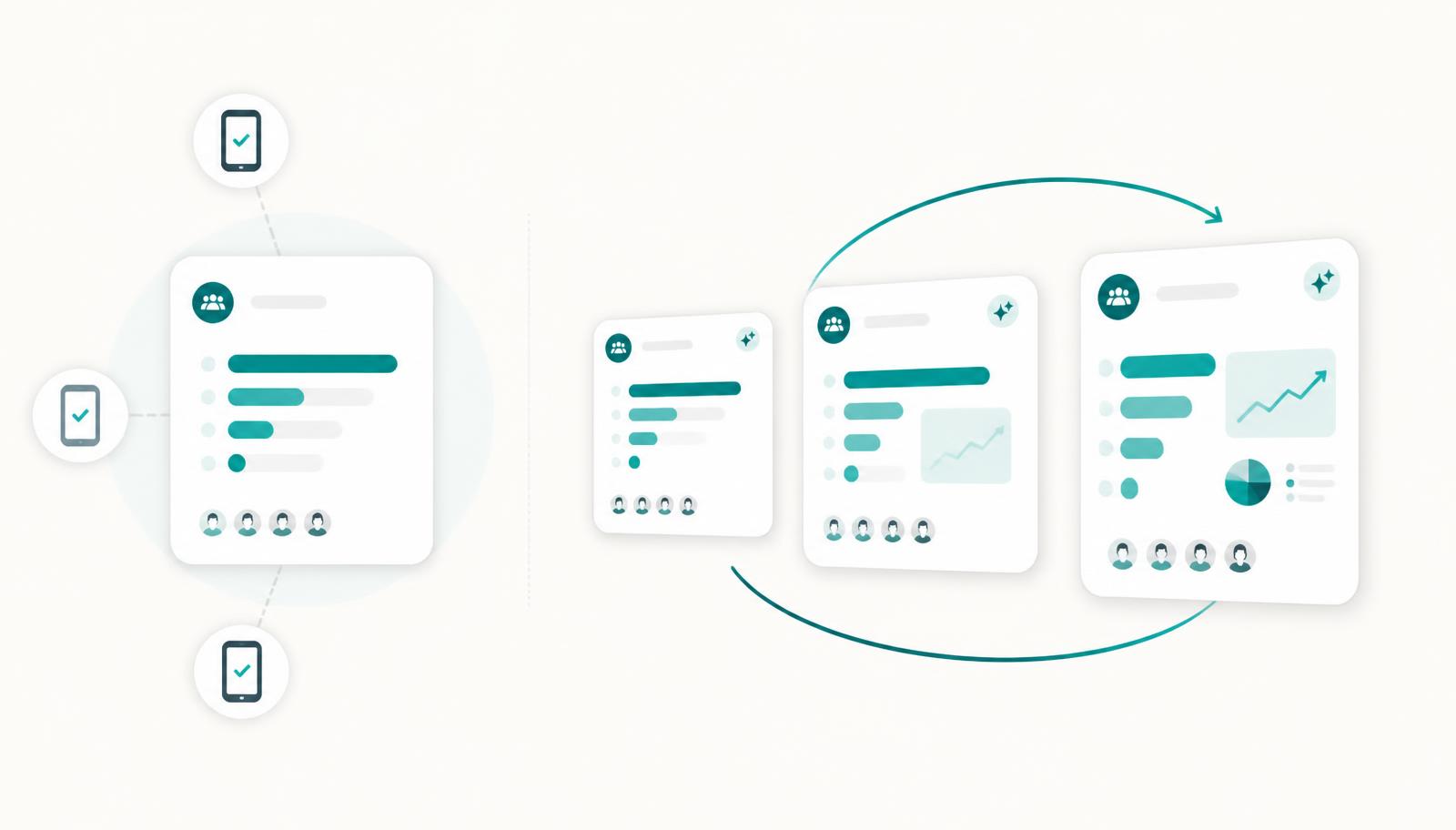
Building ownership into a weekly meeting requires distributing preparation throughout the days preceding the live call, rather than assembling slides an hour before start time. In a functional distributed workflow, the meeting process begins midway through the preceding week.
On Wednesday morning, the meeting host sets the structure for the upcoming kickoff or sync. Instead of drafting slides individually, the host opens a shared agenda space and assigns specific contribution blocks to team leads across regions. The engineer in Tokyo receives a prompt regarding technical risks; the designer in Austin receives a prompt regarding asset timelines.
By Thursday afternoon, contributors fill in their respective sections asynchronously during their local working hours. They add context, highlight potential schedule conflicts, and raise explicit questions for the group. Because inputs land in a shared place ahead of time, team members can read and reflect on their colleagues' updates without sitting through a live recitation.
When the live call occurs on Tuesday, the meeting is spent discussing the trade-offs raised during preparation, rather than presenting updates for the first time. In Curact, this workflow is built directly into the series structure: standing content and contribution links prompt team members for input days before the meeting, allowing the live session to begin on the specific decisions that require collective attention.
Following the meeting, decisions are logged immediately with assigned owners and realistic target dates. The recap is not an extra editorial chore completed by the host late in the evening; it is the direct record of the choices made during the call, published straight back to the team's working channels.
How to reset your weekly meeting rhythm this Monday
You do not need to overhaul your entire calendar to fix how your team experiences recurring meetings. You can change the dynamic of your next weekly sync by adjusting three operational habits starting this Monday.
First, replace individual status updates with a shared async check-in two days before the call. Send three consistent prompts to your team: what shipped, what is blocked, and what requires a decision during the live session. Make it clear that anything listed as an update will be read before the call, not spoken aloud.
Second, reserve the live call strictly for items marked as requiring a decision. If an item does not involve a trade-off or a cross-functional dependency, remove it from the live agenda. When people realise that attending a meeting means actively participating in choices rather than absorbing announcements, attention is far more likely to return.
Third, ensure every live discussion ends with an explicit owner and deadline. A conversation that concludes without a named owner is merely informal commentary. Assigning clear accountability before moving to the next topic helps maintain clarity, as everyone knows who holds responsibility once the call ends.
For teams that want a platform designed specifically around this rhythm, Curact organises recurring meeting series so preparation lands throughout the week and live calls remain focused on decisions.
Try Curact for your next recurring meeting series to see how distributed preparation changes live participation.
Sources
- Workplace Woes: Meetings Edition — Atlassian (2024)Knowledge workers judge most of their meetings to be ineffective.
- State of the Global Workplace — Gallup (2024)Remote and hybrid employees need deliberate rhythm to stay connected.
- Four causes for 'Zoom fatigue' and their solutions — Stanford University (2021)Video meetings tire people in ways in-person meetings do not.
Findings are paraphrased and linked to the publisher. No source text is reproduced.